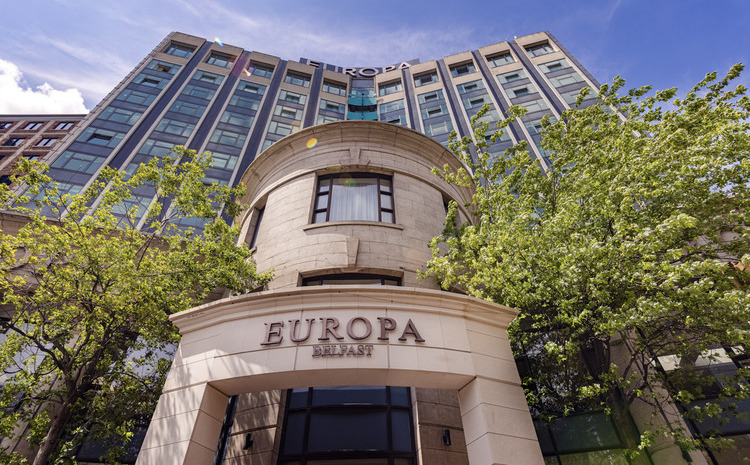
The Europa Hotel in Belfast has unveiled The Parlour, a new food-and-beverage space created as part of a reported £550,000 refurbishment that reimagines the former Piano Restaurant and refreshes the hotel’s iconic Piano Lounge. The modest-but-targeted investment aims to broaden the hotel’s daytime and evening appeal, increase capacity and deliver a more flexible social hub for guests and locals alike.
The transformation replaces a single-use dining room with an open-plan offering designed to capture multiple revenue occasions across the day. Rather than a full-scale, high-cost renovation, the project appears focused on spatial optimisation and programming — creating zones for casual drinks, light dining and more formal service without committing to a new restaurant concept. This is a pragmatic approach for a city-centre hotel seeking to drive incremental spend from both transient guests and local residents while preserving the Europa’s well-known brand identity.
Design choices that favour flexibility over spectacle
From a design perspective the work reads as an acknowledgement of changing guest expectations: people want convivial, adaptable spaces that can host breakfast, an afternoon coffee, an informal working lunch and an evening bar scene. By converting the former Piano Restaurant into The Parlour and upgrading the Piano Lounge, the hotel gains a layered hospitality environment rather than a single-purpose outlet. Good operators now prioritise sightlines, walk-up service points and mixed seating to accommodate socialising and workspace needs; these moves also reduce the dependency on dinner covers to justify F&B capital expenditure.
Operational and commercial implications
Commercially, a £550k programme is significant enough to alter offering and flow but small enough to be absorbed without major disruption to occupancy or positioning. The investment signals an intent to capture more local market share — meeting demand from corporate day visitors, event delegates and residents seeking a comfortable neighbourhood bar. For operations, success will hinge on programming (menu design, price points and service model), efficient staffing across multiple trade periods and marketing that reintroduces the space to both existing customers and new audiences.
There is also a brand-management angle: the Europa Hotel’s historic recognition — including its high-profile past and central location on Great Victoria Street — gives the new space a strong platform, but it also raises expectations. Retaining elements of the hotel’s character while modernising the guest experience lowers the risk of alienating loyal customers. The choice to evolve the Piano Lounge as part of the scheme keeps a continuity of identity while signalling freshness.
Why this matters to hospitality operators and creatives: the Europa’s approach offers a replicable playbook for urban hotels that need to increase F&B revenue without the cost and risk of a full-scale restaurant launch. The emphasis on flexible zoning, incremental investment and programming that targets both locals and transient guests demonstrates how relatively modest capital can unlock new trading opportunities. For designers and marketers it underlines the importance of creating versatile spaces and storytelling that link a hotel’s heritage to contemporary social behaviours — a practical lesson in balancing authenticity with commercial agility.