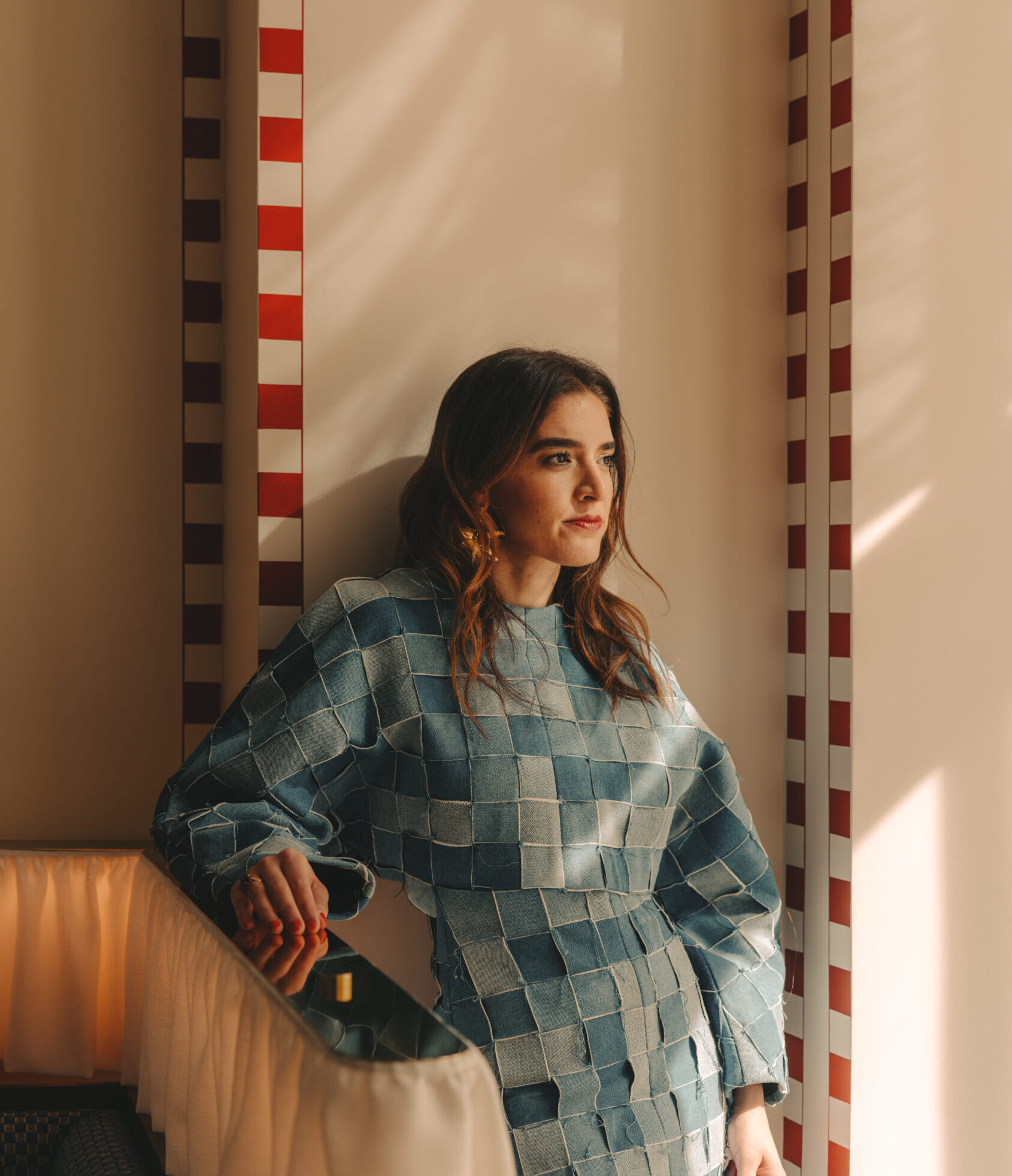
Stephanie Barba Mendoza’s interview in SPACE charts the arc from senior role within an established London studio to the founder of a compact, globe‑spanning practice. The piece underlines the pragmatic drivers of that transition — a long apprenticeship, a defining project (Annabel’s), and an appetite for richly layered, sensory hospitality interiors — and signals how small, design‑led studios can scale influence through selective partnerships and a strong design DNA.
From apprenticeship to authorship: the value of a signature project
Barba Mendoza’s trajectory—trained in Mexico, refined in London, ten years at Martin Brudnizki Design Studio and then a leap to found her own practice in 2020—illustrates a familiar but instructive route in hospitality design. Her stewardship of high‑profile commissions such as Annabel’s functions as the kind of career fulcrum that gives designers licence to be risk‑taking and directional. For hospitality operators, that background is a useful assurance: the creative director arriving at a briefing table brings not only aesthetic language but the operational experience of delivering ambitious, brand‑defining interiors under real commercial constraints.
Small studio, big geography: partnerships and project curation
Operating with a compact team — reported as about seven people — Barba Mendoza’s studio has nonetheless placed work across three continents, from Wilde hotels in Vienna, Lisbon, Porto and Amsterdam to projects in Vietnam, Bordeaux (scheduled for 2027) and a culture‑and‑music club in Mexico City. The strategy is recognisably contemporary: instead of expansive headcounts, pursue tightly curated collaborations with operators and brands that share sensibilities. The benefit is twofold — creative control and agility on the one hand; a need for strategic alliances, robust delivery partners and tight project management on the other.
Her work’s hallmarks — layered materiality, decorative bravura and a sensibility that shifts effortlessly between neighbourhood hangout and destination hotel — make clear how narrative and atmosphere are used as commercial levers. These interiors are intentionally theatrical yet guest‑centric: materials, furniture and finish decisions are chosen to support a sequence of daily uses, from morning coffee to late‑night socialising, which is crucial for hotels that must function across multiple revenue moments.
There are also operational lessons embedded in the interview. Ambitious aesthetic programmes still require brave clients and appropriate budgets; Barba Mendoza emphasises that creative risk and financial investment are complementary. For emerging studios, the model she exemplifies — develop a recognisable visual language, demonstrate delivery on a few flagship projects, then scale through selective partnerships and repeat commissions — is a pragmatic road to both reputation and resilience.
Why this matters to hospitality operators and creatives: the interview underscores a contemporary reality in hotel design — distinction often comes not from scale but from intent. Operators seeking to differentiate through interiors should favour collaborators with coherent authorship and a proven track record of delivery; designers and small studios should prioritise projects that showcase their narrative strengths while building delivery systems and partnerships that translate aesthetic ambition into operationally viable spaces.