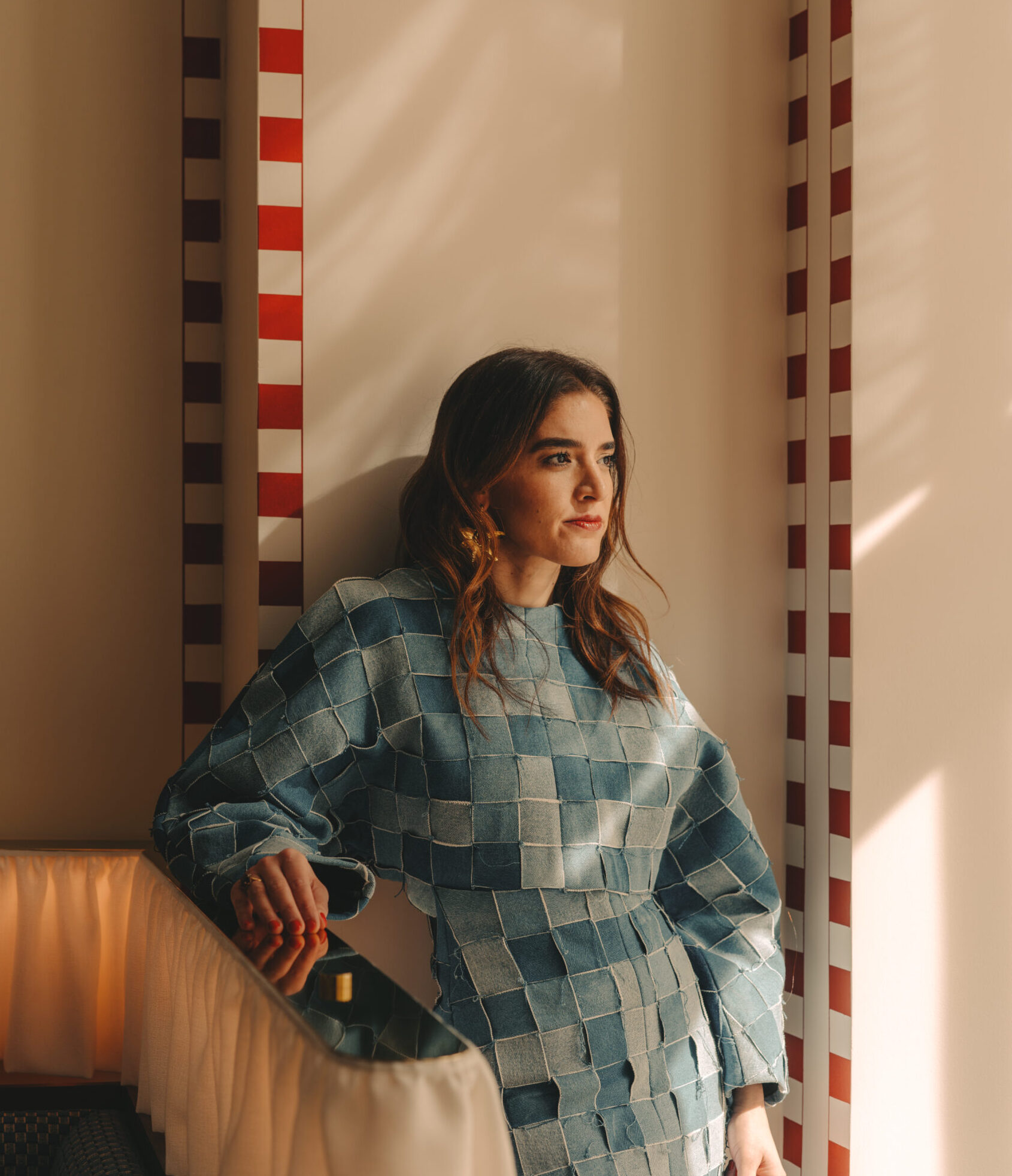
Stephanie Barba Mendoza’s interview in SPACE profiles a designer who has translated a decade of senior hospitality experience into an independent studio with a distinct sensibility: warm, tactile interiors that read as both theatrical and intimately lived-in. The piece traces her trajectory from lead roles at major London practices to establishing her own studio in 2020 and building repeat relationships with hospitality clients.
Crafting a recognisable studio voice from hospitality pedigree
Barba Mendoza’s practice is rooted in a lineage of hospitality design that prizes atmosphere as a strategic asset. Her biography shows a long tenure at Martin Brudnizki’s studio, where she led large-scale hospitality commissions; since launching her own studio in 2020 she has synthesised those lessons into a compact, coherent point of view. The recent commissions that have attracted press—such as the Wilde Lisbon hotel and collaborations on projects involving bespoke surfacework—demonstrate a consistent use of material richness, layered colour and carefully composed furniture palettes. Rather than signalling an abrupt break from the aesthetics of the studios that shaped her, her work refines and personalises them: less studio ornament, more careful choreography of guest movement, light and texture.
Balancing bespoke detail with repeatable brand systems
A notable strand in the reported interview is the studio’s ability to operate at two scales simultaneously: delivering the one-off, craft-driven moments that make individual hotels feel singular, while also translating a brand language across multiple properties. SPACE notes an ongoing relationship with a brand that began in 2022 and now covers several properties—an indicator that Barba Mendoza’s work is not just creative but commercially scalable. This dual capability—detail-led interiors that can be systematised for roll-out—is increasingly valuable as lifestyle groups look to preserve authenticity while expanding portfolios fast.
Her background and collaborations also underscore another commercial advantage: cultivated partnerships with artisan makers and specialists. Projects that foreground bespoke wall coverings, curated lighting and hand-crafted elements suggest a studio workflow that integrates in-house design development with carefully chosen suppliers. That model can produce memorable design signatures without the logistical fragility that pure one-off craftsmanship sometimes introduces at scale.
Why this matters to hospitality operators and creatives: Barba Mendoza’s trajectory is a practical blueprint for studios and operators who need atmospherics that both differentiate and endure. For operators, her studio shows how a disciplined creative language can be translated across properties to build brand equity while retaining local specificity. For designers and studios, her approach proves the commercial value of combining high-calibre craft with repeatable systems—an approach that reduces risk for clients, supports operational roll‑out, and ultimately helps hotels feel designed rather than merely dressed.