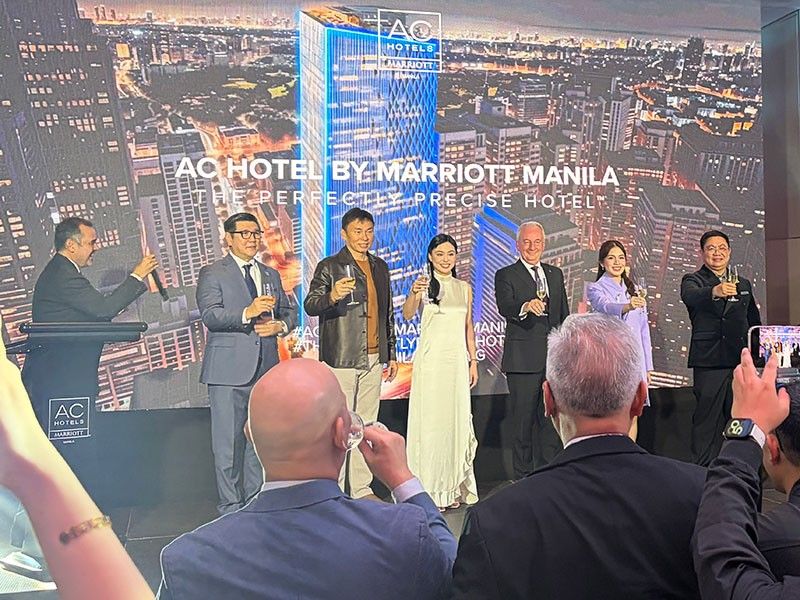
AC Hotel by Marriott has opened its first Filipino outpost in Ortigas, Pasig — a conscious transplant of the brand’s pared-back European aesthetic into a distinctly Filipino context. The new property occupies the all‑glass GLAS Tower and positions itself as an urban, design‑led business hotel that pairs AC’s signature Iberian touches with local hospitality cues.
Design language: restrained European bones, local softening
The AC Hotel’s visual vocabulary is recognisably European: clean lines, abundant natural light from the tower’s glazed façade, and communal social spaces modelled on the brand’s tapas‑inspired food and beverage programme. Yet the Manila hotel tempers that minimalism with overt nods to Filipino warmth — a menu that mixes European small plates with pork sisig and adobo, and public spaces intended for lingering rather than fleeting transit. The rooftop AC Bar and the all‑day AC Kitchen give the brand’s signature moments (think AC Gin & Tonics, tapas and lavender turndowns) local licence, signalling an attempt to do more than replicate a template. In practice this means the brand’s disciplined material palette is enlivened with softer hospitality gestures: elevated casual dining, visible service choreography and curated views across Ortigas rather than an imported luxury theatre.
Market positioning: first‑mover advantage amid growing supply
Marriott’s AC Hotels have historically positioned themselves as upscale, design‑forward options for business travellers and urban leisure guests. In Manila, the property’s location in Ortigas centres it within corporate corridors and lifestyle nodes, appealing to mixed transient demand. With roughly 150–160 rooms and dedicated event spaces, the hotel reads as a strategic complement to larger full‑service competitors rather than a direct rival to five‑star resorts. The brand’s emphasis on efficient, localised experiences — rooftop bars, compact ballrooms and a strong food & beverage identity — is a practical response to Manila’s crowded pipeline: occupying the first AC slot in the country gives Marriott a foothold that can attract design‑minded loyalty members and corporate accounts seeking a consistent yet city‑specific product.
Operationally, the blend of European service rituals and Filipino hospitality presents both an opportunity and a test. Maintaining AC’s precise, contemporary standards while adapting service rituals and culinary programming to local expectations will require careful staff training, consistent sourcing for signature moments, and programming that keeps the rooftop and restaurant relevant to neighbourhood residents as well as guests.
Why this matters to hospitality operators and creatives: The opening demonstrates how international lifestyle brands can succeed by translating a coherent design DNA into local cultural currency. For operators, it’s a reminder that first‑mover entries should balance brand consistency with purposeful localisation — from menu curation to communal spaces — to capture both business travel and domestic-city‑leisure demand. For creatives, the project underlines the commercial value of subtle intervention: restrained European frameworks can be activated by culturally intelligent detailing, F&B concepts and programming that invite the neighbourhood in, not just pass through.