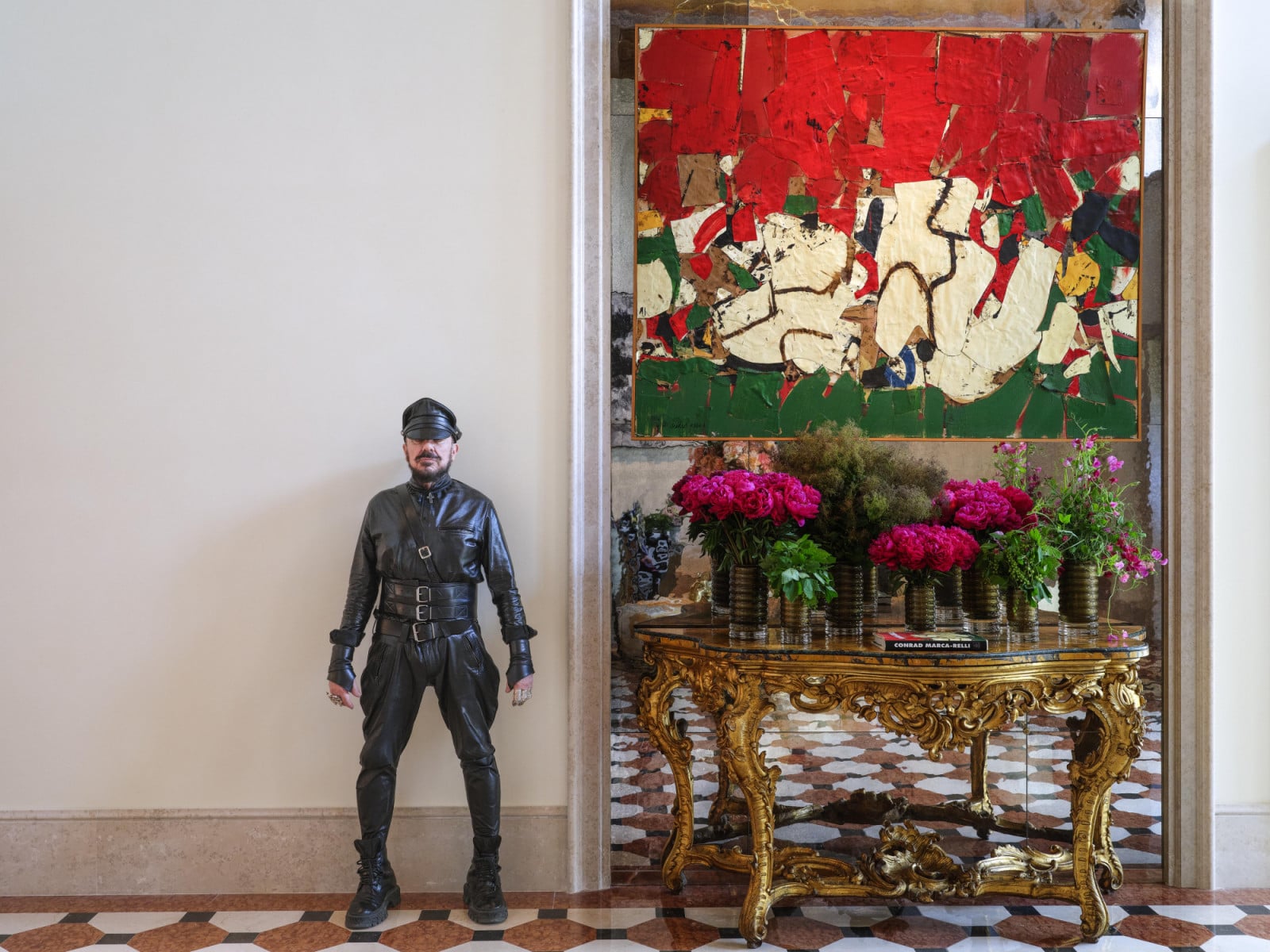
Peter Marino’s multi-phase overhaul of the venerable Hotel Cipriani on Giudecca Island recasts the 67-room Belmond property as a hybrid of conservation project, mid‑century revival and contemporary art gallery. Marino frames the redesign around three chronological strata — Old Venice, the mid‑century era when the hotel opened, and post‑war and contemporary art — and has already completed a first phase that includes a new double‑height lobby and a tranche of refurbished suites.
Architecture as curated backdrop
Marino’s practice, known for dressing luxury retail and private homes in the language of museum display, treats buildings as frameworks for collections rather than neutral shells. At Cipriani this manifests in architectural moves that favour calm canvases — terrazzo flooring and simplified double‑height spaces — designed to suspend the eye and foreground artworks and antiques. The lobby’s terrazzo and gilded seating read as stage‑setting devices that allow both mid‑century Italian avant‑garde and international abstract painters to take visual precedence. These decisions signal a deliberate shift from decorative pastiche to a choreography between object and setting.
Art choices, provenance and place
Rather than an opportunistic art‑for‑ambience programme, Marino assembled works that speak to Venice’s art historical continuum. The selection includes Italian post‑war figures such as Carla Accardi, Edmondo Bacci and Emilio Vedova alongside mid‑century internationals including Milton Resnick and Hans Hartung, creating dialogues across scale and technique. This curatorial strategy does two things: it roots the redesign in local cultural lineage, and it leverages original artworks as experiential differentiators, turning rooms and public areas into site‑specific encounters rather than mere backdrops for luxury hospitality.
The project is also informed by Marino’s role as chair of the Venetian Heritage Foundation, which frames the intervention as conservation‑minded rather than a wholesale contemporary overwrite. Belmond — the hotel’s owner since 1976 and part of LVMH since 2019 — has positioned Cipriani as its archetypal Venetian retreat; Marino’s phased approach (the first phase opened on 27 May 2025) preserves that lineage while inserting a visibly modern curatorial logic.
Why this matters to operators and creatives: Marino’s Cipriani work demonstrates how high‑end hospitality can resolve the tension between heritage stewardship and contemporary relevance. For operators, the lesson is commercial and programmatic: investing in art and considered architectural restraint can create unique, bookable experiences that justify premium positioning. For designers and curators, it underlines the value of sequencing — using architectural interventions, material restraint and historically informed curation to make artworks the primary brand signal, rather than applied decoration. The result is hospitality that feels both anchored in place and confidently of the present.