Hotel Lucile’s conversion of a 1930s Romanesque church into a boutique stay has introduced Sous Sous, a restaurant that stitches together Southern French technique and coastal American flavours within Silver Lake’s evolving hospitality landscape. The project—delivered by Casetta Group and realised by Electric Bowery—pairs ambitious adaptive‑reuse design with a culinary programme led by Patrick Costa and beverage director Lee Zaremba.
Architecture and art that foregrounds place
Rather than erasing the building’s ecclesiastical past, the design team retained the nave’s structural drama—exposed beams, stained‑glass fragments and a former stage—then layered contemporary interventions to make the room functional as a dining venue. Dramatic wooden arches at the bar echo the original ceiling, while 25‑foot curtains enable the space to flex between an open dining room and a more intimate bar or private area. The interiors are conceived as a “living gallery”: two large, hand‑painted murals and a rotating programme of artists, talks and performances aim to keep the atmosphere dynamic and to animate the hotel’s cultural programming beyond mere decoration. These choices signal a desire to make the restaurant part of a wider neighbourhood cultural offer, not simply a hotel amenity.
A menu that maps two southern traditions onto local produce
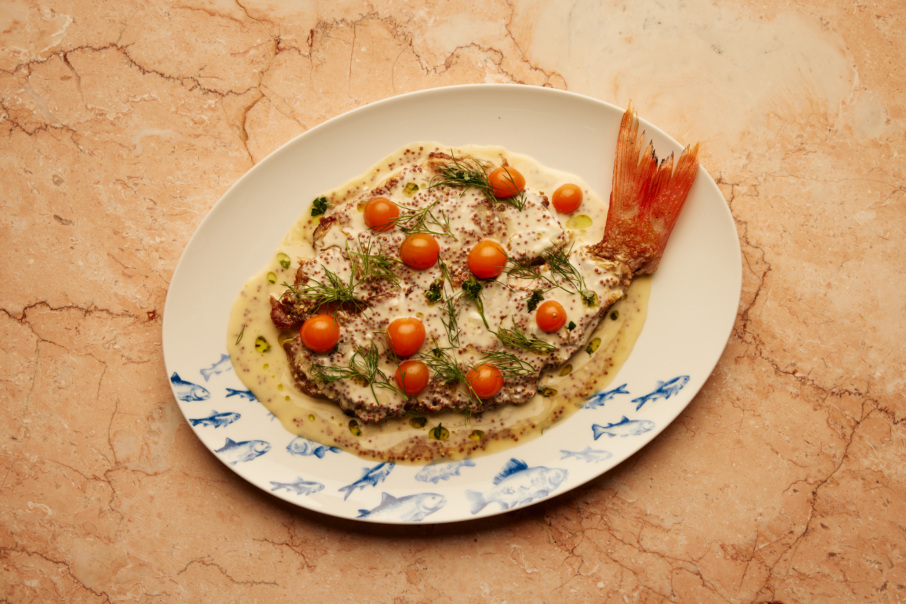
Culinarily, Sous Sous positions itself at the intersection of the American South and Southern France, using seafood as the connective tissue. Head chef Patrick Costa—whose previous work included De La Nonna—frames dishes around seasonal, local seafood from North American purveyors while referencing techniques and compositions associated with French cuisine and coastal Southern cooking. The menu features a raw bar, a shareable bouillabaisse that blends a Southern shrimp‑boil sensibility with classic Provençal shellfish elements, and comfort items such as hushpuppies and a burger, enabling the restaurant to serve both specialist seafood diners and more casual neighbourhood trade. Beverage director Lee Zaremba’s cocktail list leans into New Orleans traditions with playful riffs—an approach that complements the kitchen’s hybrid identity.
Operationally, the restaurant’s flexibility—bar seating that extends into the dining room, a stage that doubles as private dining, and an evolving art programme—gives Casetta Group multiple revenue and programming levers. The project also demonstrates how careful stewardship of an architecturally significant shell can create a distinctive hospitality proposition that reads as authentic to place while remaining commercially viable.
Why this matters to hospitality operators and creatives: Sous Sous is a compact case study in marrying adaptive‑reuse design with a clear culinary voice. For operators, it shows the value of programming flexibility and of building a restaurant that serves both hotel guests and local regulars. For designers and curators, it underlines how an evolving art and events programme can extend a venue’s life and relevance—turning static décor into a live platform that attracts repeat visits and community engagement.