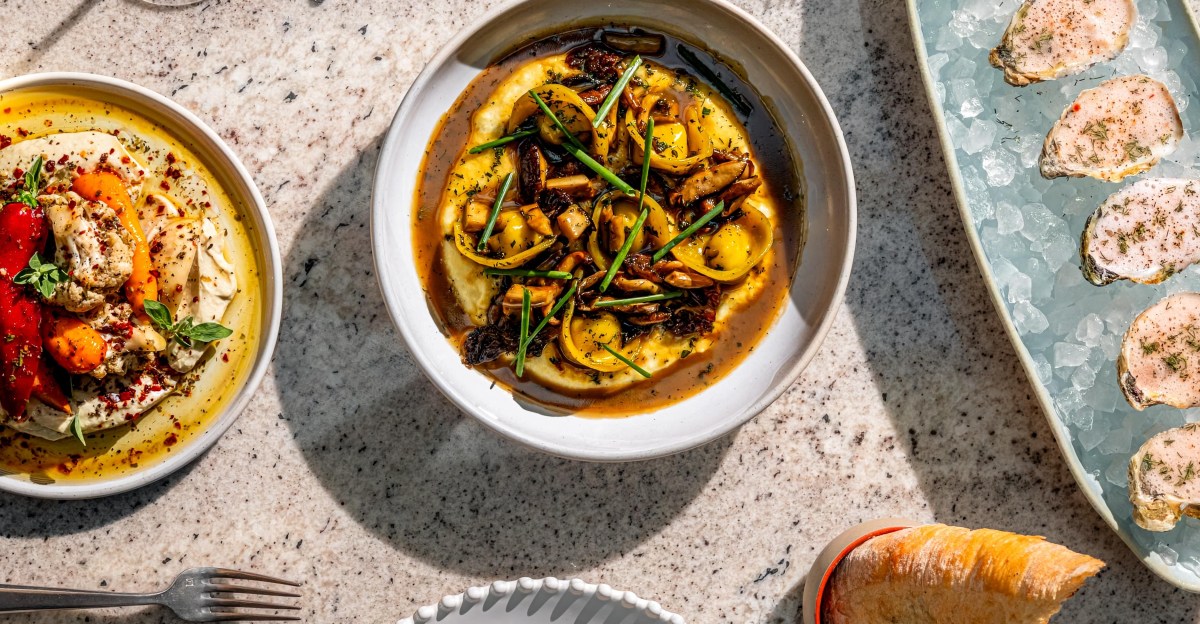
Altair, a New York City–born restaurant from Renwick Hospitality, has opened inside the Arlo hotel in Penn Quarter. The 82‑seat New American dining room leans into a “celestial” concept and a seasonally driven menu, and it brings a design-led, hotel‑integrated offering to one of downtown Washington’s most tourist‑dense neighbourhoods.
Design and atmosphere: a theatrical canopy for casual dining
The restaurant’s interior is presented as a singular visual gesture: a lounge‑style dining room anchored by a live tree and an array of hanging lanterns that form a moody canopy over seating. That scheme, credited to 3877 Design for the Washington iteration, frames the space as part dining room, part set piece—an intention reinforced by earth‑inspired finishes and warm timber. The choice of a living tree as a central element signals an effort to create an immersive, Instagram‑ready focal point that reads well both for hotel guests arriving from nearby institutions and for locals seeking a memorable night out.
Culinary positioning and operational fit inside a hotel
Renwick Hospitality has positioned Altair as New American with a hyper‑seasonal focus and references to the four classical elements—earth, air, fire and water—shaping the menu narrative. An 82‑seat capacity places it squarely between an intimate neighbourhood restaurant and a larger hotel outlet, suggesting a program able to handle both steady breakfast/lunch traffic from guests and higher‑turnover evening covers. Because the restaurant sits at the foot of Arlo’s Penn Quarter property, its success will hinge on balancing hotel convenience with an identity compelling enough to draw walk‑ins in a busy downtown dining district.
Altair’s arrival continues a familiar pattern: hospitality groups transplanting successful New York concepts to secondary markets where a hotel platform reduces launch risk. The team behind Altair operates other Arlo‑affiliated venues and has experience with seasonal, design‑forward dining—advantages when integrating a new food and beverage offer into an existing hotel ecosystem. The connection to the Arlo brand also supplies a ready customer base, though it means the restaurant will be judged on how distinct it can be from typical hotel dining offerings.
Why this matters to operators and creatives: Altair demonstrates two converging priorities in contemporary hospitality —experiential design that doubles as marketing, and cuisine built around seasonality and a clear narrative. For operators, the lesson is pragmatic: hotel partnerships shorten the path to sustainable covers but demand a concept flexible enough for transient and local patrons. For designers and brand teams, the opportunity—and risk—is to create an arresting, photographable moment (the tree-and-lantern canopy) that drives awareness without overshadowing service, circulation and acoustics. In a dense market like Penn Quarter, achieving that balance is what will determine whether Altair becomes a neighbourhood mainstay or simply a striking addition to a crowded openings cycle.