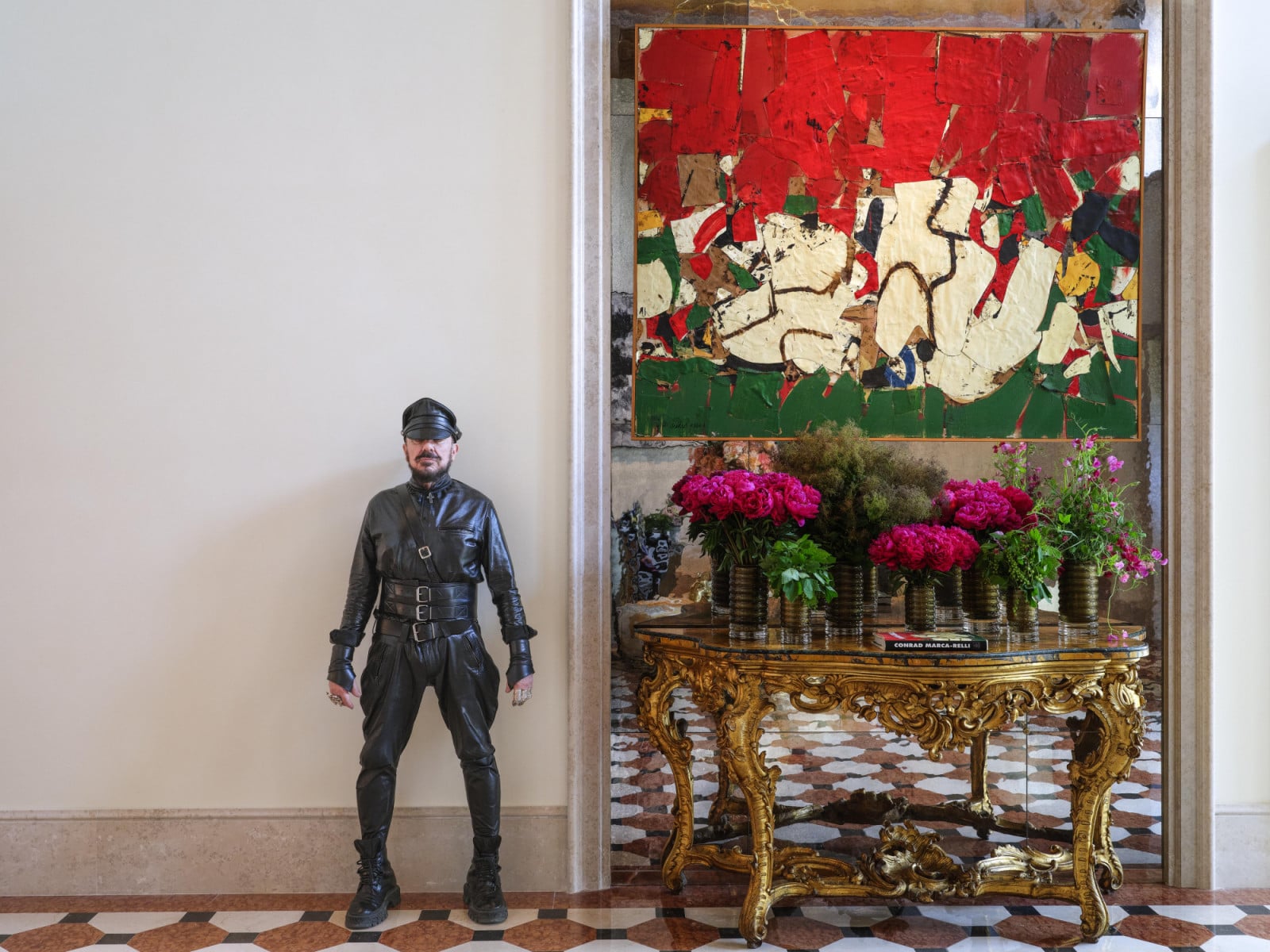
Peter Marino’s ongoing, multi‑phase refurbishment of Hotel Cipriani on Giudecca is less an update than a cultural recalibration: a deliberate stitching together of Venice’s artisan past, mid‑century glamour and contemporary art practice. The project—led by Marino in collaboration with Belmond—has already revealed a redesigned double‑height lobby, reimagined suites and refreshed restaurants that foreground both historical craft and museum‑scale collecting.
Marino approaches Cipriani with the dual instincts of a collector and a maker. Long associated with high‑end retail and gallery‑grade interiors, he has introduced art and objet d’art as organising devices rather than mere decoration: large contemporary paintings, museum‑quality sculptures and curated vignettes sit alongside Murano glass, antiques and Venetian commodes. The result is an interiors strategy that reads as layered rather than period‑perfect, where provenance and placemaking coexist with contemporary gestures inspired by the Biennale and Marino’s own collecting practice.
Balancing heritage craft with contemporary intervention
The work deliberately negotiates Venice’s preservationist sensitivities. Rather than stripping away, Marino amplifies the hotel’s pre‑existing narratives—its 1950s dolce vita glamour, its garden setting and the artisanal legacies of Murano and local cabinetry. Practical interventions—such as the lobby’s heightened spatial drama and newly configured suites overlooking the lagoon—are matched by painstaking material choices: hand‑blown glass, bespoke upholstery and antiques sourced to feel integral rather than pasted on. These decisions position the Cipriani as an argument for layered restoration: heritage as a platform for new cultural programming, not a museum frozen in aspic.
Luxury hospitality as cultural stage
Marino’s Cipriani reframes the hotel as a cultural stage where hospitality, exhibition and commerce intersect. The insertion of contemporary works and large furniture moments creates sightlines and moments of discovery that echo a small museum experience inside a functioning hotel. This is a deliberate storytelling tactic: guests are invited to move through a curated narrative that links private apartment‑style suites, dining rooms featuring Murano glass and public reception spaces. The approach is consistent with recent trends among top‑tier hospitality brands that use art and design to signal exclusivity and cultural relevance, especially during high‑profile moments such as the Venice Film Festival.
Operationally, the phased nature of Marino’s work—public spaces first, then suites and dining—reflects an awareness of how renovations must protect revenue and guest experience in a calendar‑sensitive city. It also signals a longer view: the hotel is being reshaped as an evolving collection rather than a one‑time makeover, allowing for future rotations of art and furniture that keep the narrative current without wholesale alteration.
Why this matters: For operators and creative teams, the Cipriani project is a primer in marrying conservation with contemporary curatorial thinking. It shows that high‑end refurbishment can add commercial value by embedding culturally credible content—museum‑quality art, authentic craft and purposeful design—into the guest journey. The lesson is practical: invest in layered storytelling, respect local craftsmanship, and sequence works to protect operations; done well, design becomes both a differentiator and a revenue driver in luxury hospitality.