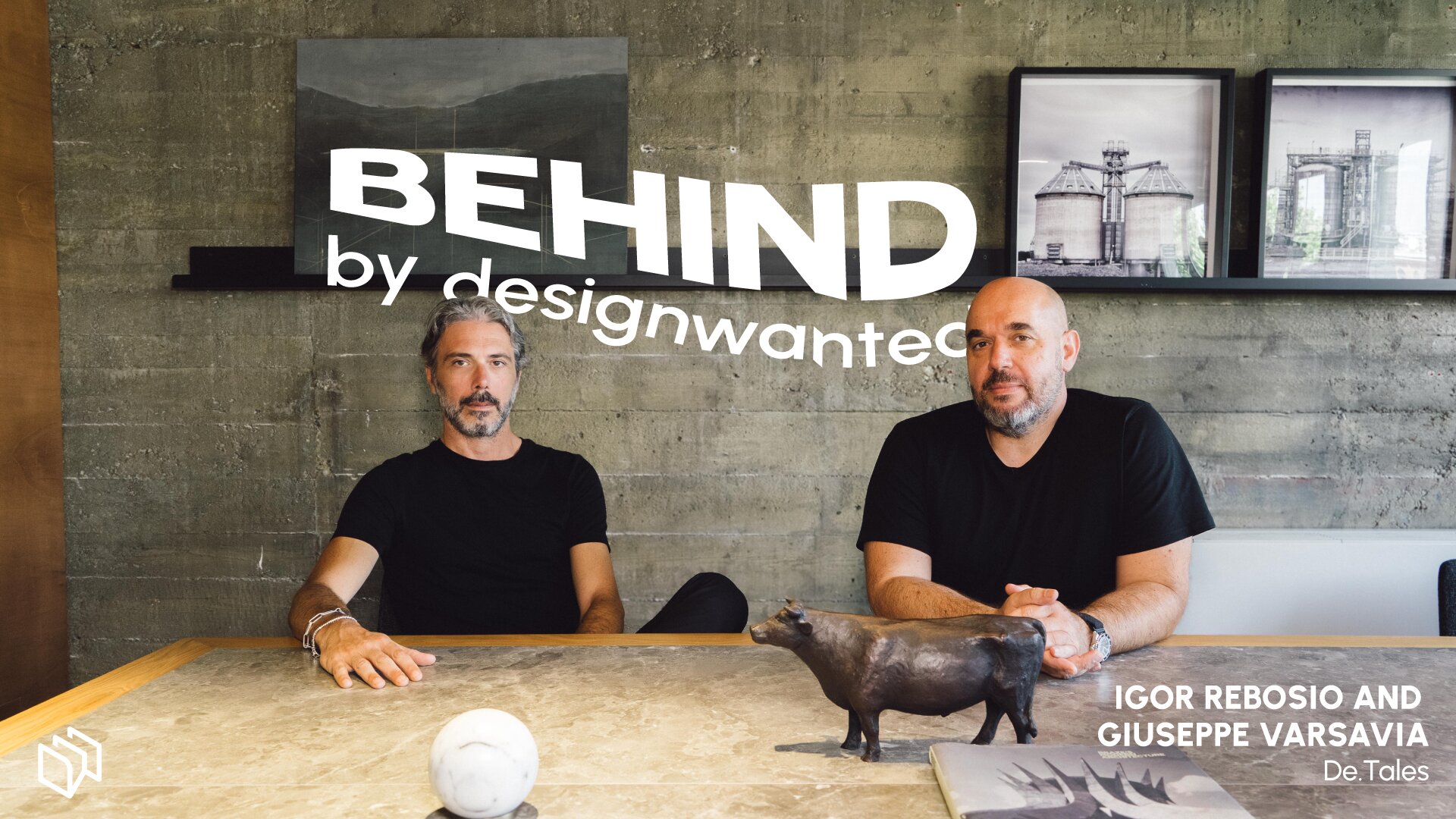
Standfirst: De.Tales, the Milan-based studio founded in 2021 by Giuseppe Varsavia and Igor Rebosio, frames each commission as a crafted narrative. Their cross-disciplinary work across architecture, interiors and product design treats storytelling as a methodological tool rather than a decorative afterthought, with hospitality emerging as a field where their approach is especially resonant.
De.Tales’ method is notable for how deliberately it collapses the conventional divide between architectural envelope and interior atmosphere. Rather than treating façade, plan and fit-out as separate stages, the studio conceives them as interdependent layers of the same story. This integrated stance is not merely organisational; it is conceptual. By aligning structure and detail from the outset, De.Tales aims to generate spaces whose formal gestures and material choices consistently articulate a singular intent — a quality that becomes visible in how they describe responding to the “genius loci” of a place.
Context as creative constraint
An important corollary of De.Tales’ narrative-first position is the way they reinterpret context as an active constraint rather than a passive backdrop. Their research-driven process reaches beyond programmatic briefs to encompass cultural references, social dynamics and the human ecology tied to a site. In practice this means each project begins with a layered reading: market positioning, ownership ambitions, brand identity and the operational realities of hospitality. The outcome is bespoke rather than formulaic — a hotel in Sicily, for example, must be conceived through different cultural and climatic logics than one in Milan, even if some aesthetic devices overlap.
Storytelling that includes operations
Perhaps the most pragmatic aspect of their approach is the inclusion of operational actors — owners, operators and staff — within the narrative frame. By acknowledging that the lived experience of a hospitality project is co-authored by these stakeholders, De.Tales shifts storytelling from image-making to behaviour-making. Material palettes, circulation strategies and amenity planning are therefore calibrated not only to convey character but to enable the routines of service and guest interaction that sustain that character over time.
The studio’s transversal practice adds complexity: working across scales and disciplines increases coordination demands, but it also intensifies the storytelling potential. When architectural structure and interior detail are designed in conversation, moments of surprise, legibility and functional clarity can be composed rather than retrofitted. This has implications for procurement, phasing and maintenance — elements that must be considered early if the narrative is to survive operational realities.
Why this matters to hospitality operators and creatives: De.Tales’ model demonstrates that rigorous storytelling can be a tool for differentiation that withstands the churn of trends. For operators, a narrative-driven design provides clearer guidance for brand activation and day-to-day service; for designers and creatives, it is a reminder that meaning accrues from the disciplined alignment of context, form and function. In short, narrative-led design offers a strategic route to distinct, resilient hospitality experiences — provided the story is researched, shared and sustained across all stakeholders.