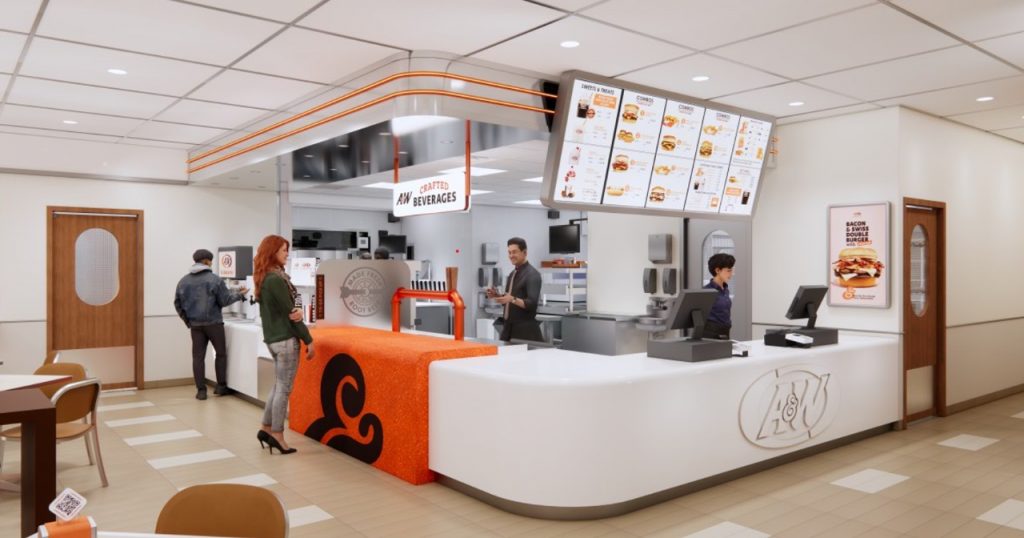
A&W Restaurants has rolled out a refreshed design language and operating model that pairs its century‑old brand cues with contemporary flexibility. The chain’s new prototype and commercial strategy emphasise smaller, adaptable footprints, a mix of ordering channels and a heritage‑tinged visual identity — all intended to broaden reach without diluting the brand’s hometown warmth.
Design that references the past but works for today
The updated prototype intentionally blends nostalgic signifiers — the frosty‑mug iconography and references to the brand’s legacy beverage craftsmanship — with pared‑back, modern finishes. The architecture and interior layouts are scaled to fit several unit sizes, from compact city sites to full‑service locations with drive‑thrus. That allows A&W to occupy non‑traditional real estate, reduce capital outlay for suburban infill or urban retrofit and still present a recognisably “A&W” guest experience. The design language stops short of pure retro pastiche: materials, lighting and circulation reflect current hospitality norms so the spaces read as both familiar and contemporary to younger guests.
Operational flexibility: multiple formats and channels
Operationally, the push is toward omnichannel accessibility. The chain is supporting front‑counter, kiosk and tableside ordering alongside drive‑thru fulfilment, delivery and catering — a suite intended to capture different guest occasions without fragmenting brand service standards. Menu tactics, such as limited‑time offers and an emphasis on craft sodas, act as revenue levers and traffic drivers while reinforcing a point of difference: A&W still “owns” its signature soft drink offering and positions it as a product pillar rather than a simple menu add‑on. Franchise materials also highlight performance targets and incentives, signalling a growth play that relies on franchise partners to execute the varied prototypes.
For franchisees and operators, the updated model seeks to balance tighter unit economics with a recognisable identity. The smaller formats lower entry barriers in many markets and support faster rollout, while the option for larger footprints keeps higher‑volume sites viable. Technology integration across ordering channels is presented as a way to protect average order value and operational throughput even as guest behaviour shifts toward convenience and off‑premise consumption.
The repositioning is pragmatic rather than radical: it leverages the brand’s heritage assets as emotional anchors while adapting the business to contemporary patterns of dining and site availability. From a branding perspective, this approach mitigates the risk of alienating long‑standing customers while remaining relevant to new demographics by modernising finishes and service flow rather than erasing legacy cues.
Why this matters for hospitality operators and creatives: the A&W case demonstrates a repeatable playbook for legacy brands seeking growth. Designers and brand teams can preserve signature elements that convey authenticity while reworking scale, circulation and service layers to suit multiple formats. Operators benefit from prototypes that lower capital intensity and from menu/product pillars that create distinctiveness in crowded markets. In short, marrying heritage signifiers with operational adaptability is a viable strategy for expanding reach without losing the emotional core that keeps guests coming back.